Basic Information
| Field | Details |
|---|---|
| Full name | Nilda Roman Perez |
| Also known as | Nilda Román Pérez, Nilda Georgina Perez, Puchi |
| Known for | Wife of Héctor Lavoe, central figure in his life story |
| Approximate birth year | Around 1950 |
| Death date | May 9, 2002 |
| Death place | The Bronx, New York |
| Public image | Private woman pulled into public legend |
| Best known relationship | Spouse of Héctor Lavoe |
Who Nilda Roman Perez Was
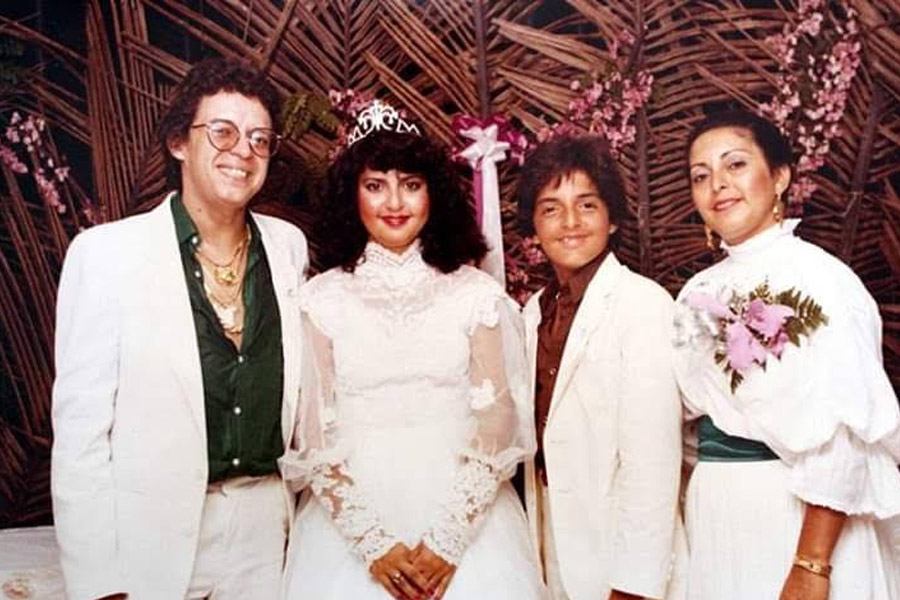
My view of Nilda Roman Perez is not that of a celebrity. I see a woman standing in the shadow of a burning star, close enough to feel the heat and sharp enough to be recalled in the smoke. She is most known as the wife of salsa legend Héctor Lavoe, but that description doesn’t do her story justice.
Nilda Roman Perez lived a loud, tumultuous, and human life. Her name changes, but she is a woman of love, suffering, family, and public memory. Her life became part of Lavoe’s legend, yet she remained quiet. Her story is powerful because of tension. She was nearby and concealed by the spotlight.
Marriage, motherhood, loss, and cinema and biography attempts to capture her voice changed her public persona. She witnessed a turbulent Latin music age and became a symbol of devotion, fortitude, and heartbreak.
Her Relationship With Héctor Lavoe
I cannot speak about Nilda Roman Perez without placing Héctor Lavoe at the center of the frame, because their lives were braided together for years. Their marriage carried affection, conflict, and strain in equal measure. This was not a quiet union. It was a house with music in one room and thunder in the next.
Lavoe’s career brought fame, travel, admiration, and pressure. Nilda lived close to that pressure. She was there during the years when the singer’s brilliance shone and when addiction, jealousy, and family pain darkened the edges of that brilliance. The relationship is often remembered as passionate but difficult, and that description feels accurate. It was a marriage built on love, yet tested by forces stronger than love alone.
I see Nilda as the person who had to live with the private cost of public applause. That cost included instability, emotional strain, and the burden of holding family life together while the outside world watched only the glamorous surface.
Family Members and Their Roles in Her Story
Héctor Lavoe, Her Husband
Héctor Lavoe was the most important relationship in Nilda Roman Perez’s public life. He was her husband and the father of two of her children. His name dominates the larger story, but her presence shaped the domestic side of that story. She was the one living inside the consequences of his rise, his troubles, and his collapse.
To me, their marriage reads like a long conversation with too many interruptions. There was love, but there was also exhaustion. Their union became one of the defining emotional threads in the Lavoe legend.
Héctor Pérez Jr., Her Son
Héctor Pérez Jr. was born on September 25, 1969. He was Nilda’s son with Lavoe, and his death in 1987 cut deep into the family’s life. Losing a child is a wound that never truly closes. In a family already marked by instability, this tragedy deepened the sorrow and gave the later story an even darker shape.
When I think about Nilda as a mother, I think about the silence that follows a loss like that. It is the kind of grief that changes the walls of a home. The memory of her son became part of the painful architecture surrounding the Lavoe family.
José Alberto Pérez, Lavoe’s Older Son
José Alberto Pérez was born on October 30, 1968. He was not Nilda’s biological son, but he belonged to the broader family orbit surrounding Héctor Lavoe. His mother was Carmen Castro, Lavoe’s earlier partner. During the years of Nilda’s marriage to Lavoe, contact with José Alberto and his mother appears to have been limited. That distance is itself part of the family history.
I include José Alberto because family stories are rarely clean lines. They are usually tangled roads. He stands as proof that the Lavoe household was larger and more complicated than a simple husband-wife narrative. There were earlier bonds, competing loyalties, and a family structure stretched by fame and conflict.
Leslie Perez, The Unclear Figure
Leslie Perez is the most complicated family member to place with certainty. Some accounts describe her as a daughter in the Lavoe household. Others say she was Nilda’s daughter from a previous relationship and later adopted by Lavoe. Public writing does not agree on the exact detail, but it does agree that Leslie was part of the intimate family circle.
That uncertainty matters. It shows how family history can blur at the edges, especially when it passes through public retellings. Leslie represents the unfinished corners of the story, the parts that do not settle neatly into a single line. Even so, she remains an important figure in any account of Nilda Roman Perez’s personal life.
The Public Story Behind a Private Woman
Nilda Roman Perez became more widely known after Héctor Lavoe’s death, when later retellings and film projects drew from her perspective. Her life became a lens through which people tried to understand Lavoe himself. That can be both honoring and limiting. It honors her because her point of view mattered. It limits her because she is often reduced to being someone else’s wife.
I think that is the central tension in her legacy. She was not simply present. She was essential. Yet public memory tends to flatten essential people into supporting roles. Nilda’s life resists that flattening. Her marriage, her motherhood, her grief, and her endurance all point to a person who lived more fully than the public record can easily show.
Her story also carries the texture of a particular time and place. New York, salsa, addiction, fame, family pressure, and loss all converge around her. She lived in a world where beauty and damage often stood side by side like twin candles burning in the same wind.
Career, Work, and Public Achievement
Entertainment and business figures have well-documented careers, but Nilda Roman Perez did not. Her public success is elsewhere. She preserved memory, witnessed Héctor Lavoe’s life, and shaped later audiences’ views of him.
That’s more important than it seems. Not everyone quits work. Some people leave traces. Nilda did both narrowly and intimately. She preserved a famous life’s emotional truth from music and hearsay.
Film and retrospective narrative contributed to her fame. That made her life part of a cultural narrative. History was not her only interest. She supported it.
Later Years and Final Years
By the time the wider world looked back on her, Nilda Roman Perez was already part of memory rather than daily life. She died on May 9, 2002, in the Bronx. The death itself is described as accidental and tragic. Her passing closed one chapter of the Lavoe family story, but it did not end the public fascination with it.
I find that the later years of her story feel almost like a fading photograph. The outlines remain, but the colors soften. She was no longer simply the wife of a singer. She had become part of the legacy that outlived him, and then part of the legacy that outlived both of them.
FAQ
Who was Nilda Roman Perez?
Nilda Roman Perez was the wife of Héctor Lavoe and a central figure in his personal story. She is also remembered as Puchi, and her life became publicly associated with Lavoe’s music, struggles, and family tragedy.
Was Nilda Roman Perez famous in her own right?
Not in the usual entertainment sense. Her public recognition came mostly through her marriage to Lavoe and the later attention given to her perspective on their life together. Even so, her role in shaping that story was significant.
How many children did she have?
The public record associates her most clearly with Héctor Pérez Jr., her son with Héctor Lavoe. The broader family story also includes José Alberto Pérez, Lavoe’s son from an earlier relationship, and Leslie Perez, whose exact relationship is reported differently across accounts.
What made her life story important?
Her life matters because it reveals the human cost behind a famous music legend. It shows marriage under pressure, motherhood under grief, and a private life pulled into public memory.
Why is she often called Puchi?
Puchi was her nickname, and it became the name many people used when discussing her in connection with Héctor Lavoe and later portrayals of their life together.
What is Nilda Roman Perez remembered for most?
She is remembered as Héctor Lavoe’s spouse, as the mother in the Lavoe family story, and as a woman whose life reflected both tenderness and hardship.