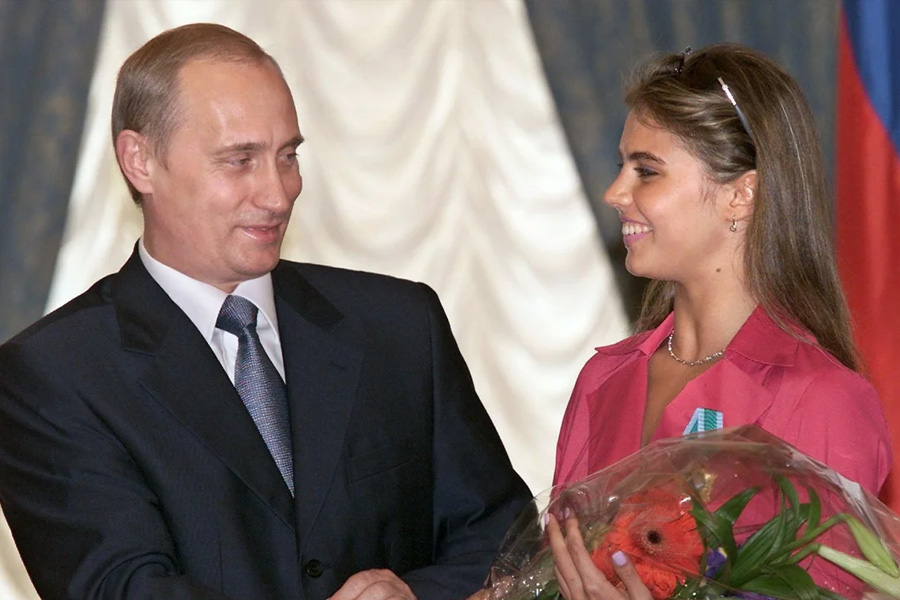
Basic Information
| Item | Details |
|---|---|
| Full name | Alina Maratovna Kabayeva |
| Common name | Alina Kabayeva |
| Birth date | 12 May 1983 |
| Birthplace | Tashkent, then in the Uzbek SSR, Soviet Union |
| Nationality | Russian |
| Known for | Rhythmic gymnastics, politics, media leadership |
| Major titles | Olympic champion, world champion, European champion |
| Public career roles | Athlete, former State Duma deputy, media executive |
From Tashkent to the World Stage
Like a comet, Alina Kabayeva crossed multiple planets. Since her birth in Tashkent on 12 May 1983, her life has taken on a greater stage than sports. Discipline, movement, repetition, and the quiet grind underlying elegant performance defined her early career. Rhythmic gymnastics looks effortless, yet work drives it. Kabayeva knew that engine.
She was one of the most famous rhythmic gymnasts. Her ascension was swift and brilliant. By the mid-1990s, she competed internationally and won her first world title in 1998. She became known for precision and poise in a sport that requires both. Her routines went beyond exercise. Artfully polished miniature storms.
Kabayeva was portrayed as a champion who could command a room without speaking. Medals, titles, and praise adorned her. She also carried the burden of spectacular achievement, when every triumph commands attention and every imperfection is magnified like a crack in glass.
The Gymnastics Career That Made Her Famous
Kabayeva’s sporting record is the foundation of her public life. She won Olympic gold in Athens in 2004 after years of elite competition, and her career included a long list of world and European medals. In the language of sport, she was not a fringe figure. She was a center of gravity.
What made her stand out was not only the medals, but the way she seemed to make the apparatus obey her. Ribbon, hoop, clubs, and ball became extensions of her rhythm. She moved with the kind of control that suggests a dancer, a chess player, and a magician all in one body. At her best, she did not merely perform a routine. She created a current.
Her competitive years were not without controversy. A doping case affected her record in 2001, and that episode remains part of her sports story. Even so, her overall legacy in rhythmic gymnastics stayed enormous. She returned to the top after setbacks and remained one of the sport’s defining names.
Kabayeva later stepped away from competition and moved into a new kind of arena. The mat and the podium gave way to politics and media, two spaces where influence can be less visible and much more complicated.
Politics, Media, and Public Influence
After her sports career, Kabayeva entered Russian public life in a different form. She served in the State Duma and later became associated with media leadership, including a major media holding. That shift was significant. She went from being admired for physical mastery to being watched as part of a wider system of power and prestige.
This second career made her even more mysterious to the public. Athletes often become symbols, but Kabayeva became something stranger. She was at once visible and hidden. Her name appeared in political and business contexts, yet details of her day to day life remained carefully guarded. That contrast gave her a shadowed aura, almost like a palace with closed curtains.
Her role in media also drew attention because media is not only about information. It is about framing reality, setting tone, and controlling the lens. Kabayeva’s position in that world suggested that her influence extended beyond sport. She became part of a larger network of visibility, power, and private access.
Family Members and Personal Relationships
Kabayeva’s family history is one of the most discussed parts of her biography. The confirmed public family members are her mother Lyubov Kabayeva, her father Marat Kabayev, her younger sister Leysan Kabaeva, and her grandmother Anna Zatsepilina.
Marat Kabayev is publicly known as her father. He has been described as a professional football player. He represents the athletic thread in the family, the kind of background that often creates a household where training and ambition feel normal rather than exceptional. I see him as part of the early architecture of her life, a person whose sporting identity formed the backdrop to her own rise.
Lyubov Kabaeva is her mother. Public accounts describe her as deeply involved in Alina’s early gymnastics training. A mother in a champion’s story is often invisible in the headlines, yet the real labor of a career usually begins there. She was part guide, part anchor, part early engine. In the biography of an elite athlete, that role can be as important as any medal.
Leysan Kabaeva is her younger sister. Public reporting has connected Leysan to real estate, law, and later judicial work in Tatarstan. She has also appeared in investigations about property and family-linked wealth. In a family story like this, siblings often create a second orbit around the central figure. They share the same origin, but their paths can diverge sharply.
Anna Zatsepilina, Kabayeva’s grandmother, has also appeared in public reporting tied to property and family networks. Grandparents often appear briefly in elite biographies, but they can represent the older line of continuity, the family soil beneath the visible branches.
There are also widely reported but unconfirmed personal claims about Kabayeva’s private life, especially around Vladimir Putin and alleged children. These reports have circulated for years, but they remain the subject of investigation, rumor, and denial rather than public confirmation. The names Ivan and Vladimir Jr. appear in newer reporting, but that information should be treated carefully. The private life is where the fog thickens most.
The Strange Weight of Privacy
Kabayeva is unusual since her public accomplishments are quantifiable, whereas her private life is disputed. Tension ensues. One side has the Olympic champion with records, medals, and official duties. The woman with rumors, guarded details, and relentless speculation is on the other side.
This gives her biography a literary sense. Her career is not all she is. She is a bright-inked and washed-out figure. A portrait with missing edges results. Theories flourish in gaps and sealed facts.
Her parents, sister, and grandmother are best known from public records. A more shaky record for intimate ties. Claims are made, disputed, repeated, and revised. That doesn’t prove them. It only loudens them.
Why Her Story Still Matters
Kabayeva matters because she stands at the intersection of sport, state, media, and secrecy. Her athletic career would have made her notable on its own. Her post-sport roles made her more than notable. They made her politically relevant. And the reporting around her private life turned her into a permanent subject of public curiosity.
I find her story compelling because it shows how a person can become a symbol while still remaining partially out of reach. She is not simply a former gymnast. She is a public figure built from medals, institutions, and speculation. That combination gives her a profile unlike most athletes. It also makes her biography difficult to pin down with perfect certainty.
FAQ
Who is Alina Kabayeva?
Alina Kabayeva is a Russian former rhythmic gymnast, politician, and media executive. She is best known for her Olympic and world championship success in gymnastics.
What are her main sporting achievements?
Her major achievements include an Olympic gold medal in 2004, multiple world titles, and numerous European championship medals. She became one of the most decorated rhythmic gymnasts of her era.
Who are her family members?
Her publicly known family members include her father Marat Kabayev, her mother Lyubov Kabaeva, her younger sister Leysan Kabaeva, and her grandmother Anna Zatsepilina.
Is her private family life fully confirmed?
No. Some details about her private relationships and children have been widely reported, but not officially confirmed. Those claims remain disputed and should be treated with caution.
What did she do after gymnastics?
After her gymnastics career, she entered politics and later worked in media leadership. That transition expanded her influence far beyond sport.
Why is she often in the news?
She remains in the news because of her public status, her past as an elite athlete, her political and media roles, and ongoing reporting about her private life and family connections.