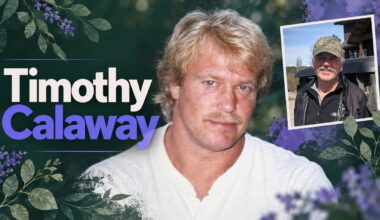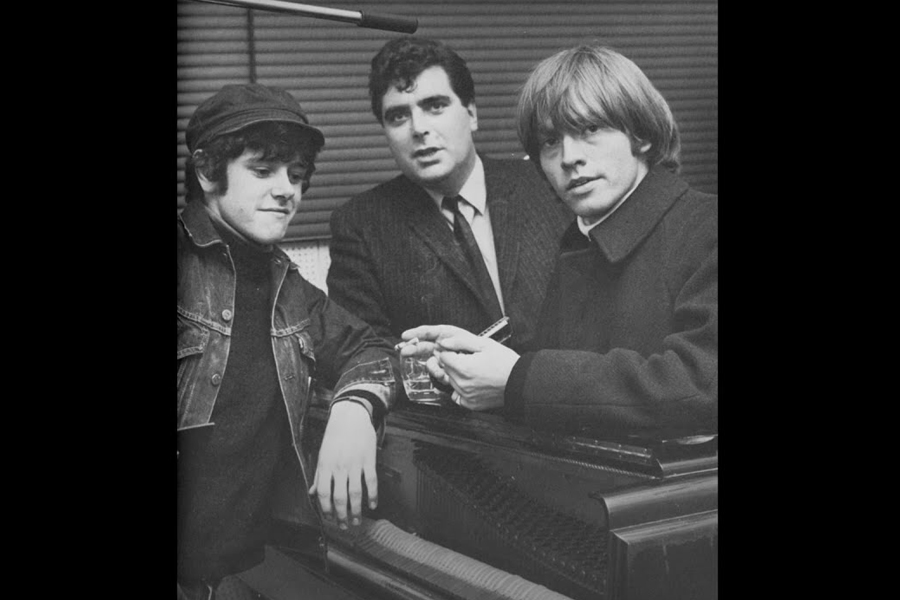
| Basic Information | Details |
|---|---|
| Full name | Julian Brian Jones |
| Also known as | Julian Jones, Julian Leitch, Julian Brian Lawrence, Julian Brian Jones-Leitch |
| Born | 23 July 1964 |
| Biological parents | Brian Jones and Linda Lawrence |
| Adoptive father | Donovan Phillips Leitch |
| Known for | Family legacy, music, and appearances in music and film circles |
| Children | Joolz Jones |
| Public profile | Private, but connected to one of rock music’s most watched family trees |
A name carried like a bright, uneasy torch
Julian Brian Jones was born into a boisterous narrative. His name combines musical history, family legacy, and public curiosity. He is related to Rolling Stones founder Brian Jones and Linda Lawrence, his mother. After Linda married Donovan Phillips Leitch, Julian was adopted into a new family branch and took the surname Leitch.
That lifestyle can feel like living in two mirrors. One mirror shows fame. Another represents family. Julian is where reflections meet.
He was born July 23, 1964. His life began with music, identity, and surname changes. His biography is about more than one man, thus those elements matter. The familial network, fame’s legacy, and how a private life can create public footprints are all important.
Family roots, branches, and echoes
Julian Brian Jones is the son of Brian Jones and Linda Lawrence. That is the core fact around which everything else turns. Brian Jones was a major figure in the Rolling Stones story, and Linda Lawrence remained a steady presence in Julian’s life after Brian’s death. Julian’s early world was shaped by that connection, even when the public story around it became tangled.
Linda later married Donovan Phillips Leitch in 1970, and Donovan adopted Julian. That made Donovan a father figure in law and in daily life. Julian’s identity therefore became layered. He was Brian Jones’s son by birth and Donovan Leitch’s son by adoption. Both lines matter. Both lines shaped the family narrative around him.
Julian also has siblings and half-siblings in this blended family. Oriole Nebula and Astrella Celeste are identified as his sisters through Linda and Donovan. Ione Skye is also connected to the family tree through Donovan’s earlier family, which places her in the wider sibling circle around Julian. In these kinds of families, the word sibling can hold more than one meaning at once. Blood, adoption, household, and history all pull in different directions, like branches bending under the same wind.
His paternal grandparents are Lewis Blount Jones and Louisa Beatrice Jones, on the Brian Jones side. His maternal grandparents are Alec Lawrence and Violet Lawrence, on the Linda Lawrence side. Through Donovan, he is also connected to Donald Leitch and Winnyfred Philips as adoptive grandparents. The family structure is wide, layered, and unusually public.
Brian Jones also had sisters, Pamela Jones and Barbara Jones, who are Julian’s paternal aunts. These names matter because they show that Julian’s family is not just a headline. It is a real family with older and younger generations, full of relationships that spread outward in all directions.
A private life with public traces
Julian Brian Jones is not a classic celebrity with a constant spotlight. He is more like a figure seen in fragments. A photograph here. A performance there. A name in an archive. A brief mention in a family story. That does not make him less important. It makes him more elusive.
His public career details are modest but meaningful. He has been described as a musician, and there are signs that he recorded material under names such as Julian Jones and Julian Leitch. Songs linked to him include titles like “I’m an American,” “Heaven,” “Traces,” and “Heavy Inside.” He also appears in performance footage, including a version of “Sympathy for the Devil.” These details suggest someone who did not merely inherit a famous name but tried to make music his own.
The most interesting thing about his career is that it seems to move between visibility and obscurity. That gives it a certain grainy beauty. It is not a polished monument. It is more like a half-open door with music drifting through it.
There is no reliable public net worth figure that I would treat as solid. He does not appear to be the kind of person whose finances are commonly reported or carefully tracked. His value is not best measured in numbers anyway. His story is carried through family, music, and memory.
The next generation and the continuing line
Julian’s son is Joolz Jones, who has also become visible as a musician. This is one of the clearest signs that the family’s creative thread did not stop with Julian. It moved forward. Joolz has been associated with music releases and live performances, and that places Julian in the role of father to another artist who is carrying a family rhythm into the present.
That continuity matters. Family legacies can sometimes collapse under their own weight, but here the pattern seems to keep moving. Brian Jones left a name. Linda Lawrence held a family together through change. Donovan Leitch brought adoption and a second musical lineage into the picture. Julian lived inside that convergence. Joolz now extends it.
The family story is not simple, but it is alive. It stretches like a line of fire through decades of music and memory.
Recent mentions and public visibility
Julian Brian Jones is often mentioned by family members, especially Joolz Jones and archive sources. Even when Julian isn’t in the spotlight, such mentions keep him known.
This visibility is subtle. Not a bright spotlight. Like moonlight on waves. Movement is visible, but not always the source.
He remains mentioned in Brian Jones and his family legacy conversations. That means Julian is part of a bigger cultural conversation, even if he is not the most vocal.
Extended family map
Julian’s family can be understood as a web rather than a straight line. At the center are Brian Jones and Linda Lawrence. Around them are the grandparents, siblings, half-siblings, aunts, and the adoptive branch through Donovan Leitch.
Brian Jones and Linda Lawrence gave him his birth identity. Donovan Leitch gave him a second family name and a household context that shaped his upbringing. Oriole Nebula, Astrella Celeste, and Ione Skye place him within a blended sibling structure. Lewis and Louisa Jones, Alec and Violet Lawrence, and Donald and Winnyfred Philips anchor him in older generations. Pamela and Barbara Jones connect him to the wider Jones family line. Joolz Jones carries the story into the next generation.
That family map is not neat, but it is powerful. It shows how identity can be layered, inherited, and revised over time. Julian’s life sits at the center of that pattern.
FAQ
Who is Julian Brian Jones?
Julian Brian Jones is the son of Brian Jones and Linda Lawrence. He was later adopted by Donovan Phillips Leitch and has been publicly linked to music, family history, and the legacy of the Jones and Leitch families.
What is Julian Brian Jones best known for?
He is best known for being part of a famous music family, for his connection to Brian Jones of the Rolling Stones, and for his own quiet presence as a musician and figure in archive and family-related material.
Who are Julian Brian Jones’s parents?
His biological parents are Brian Jones and Linda Lawrence. After Linda married Donovan Phillips Leitch, Donovan adopted Julian and became his adoptive father.
Does Julian Brian Jones have siblings?
Yes. He is connected to Oriole Nebula and Astrella Celeste as siblings through Linda Lawrence and Donovan Leitch. He is also connected to Ione Skye through Donovan’s earlier family.
Who are Julian Brian Jones’s children?
His son is Joolz Jones, who has also become involved in music and public performances.
Is there a confirmed net worth for Julian Brian Jones?
No reliable public net worth figure is available. I would not treat online guesses as trustworthy because his public profile is limited and family-focused rather than financial.
Why is Julian Brian Jones discussed in music history?
Because he is part of the Brian Jones family line and has also been associated with music himself. His life links the legacy of 1960s rock to later generations through family, recordings, and public appearances.