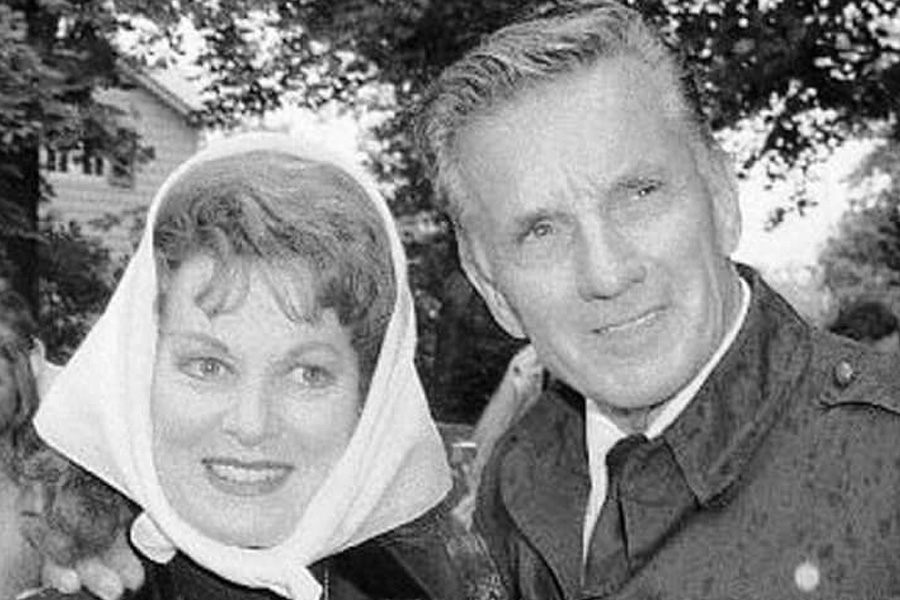
Who Was Charles F Blair Jr
Charles Francis Blair Jr, born on July 19, 1909, in Buffalo, New York, was an American aviation pioneer whose life revolved around courage, technical innovation, and an unrelenting desire to explore the limits of flight. A naval aviator, military officer, commercial airline pilot, test pilot, and entrepreneur, he helped shape long distance aviation during a period when crossing oceans and navigating the polar regions demanded exceptional skill.
Blair is best remembered for his historic solo flight across the North Pole in a single engine aircraft in 1951 and for founding Antilles Air Boats, a Caribbean seaplane airline that transformed transportation between the Virgin Islands. His career connected military aviation with commercial innovation, while his personal life brought him into a family that included four children and his celebrated fourth wife, Irish American actress Maureen O’Hara.
I find Blair’s story especially compelling because it combines the daring of an explorer with the discipline of an engineer and the practical instincts of a businessman. He did not simply fly into unfamiliar territory. He helped demonstrate how aircraft could make previously difficult journeys possible.
His achievements unfolded during a transformative era in aviation, when improved engines, navigation instruments, and aircraft designs were steadily shrinking the distances between continents.
Early Life and Family Background
Charles Francis Blair Jr. was born to 1877–1961 Charles Francis Blair and 1878–1980 Grace E. McGonegal Blair. His father attended Harvard Law School, and his mother outlived her son by nearly two years.
Blair became interested in aviation while flying was still dangerous and difficult. The airplane wasn’t common transportation. When weather or equipment failed, pilots needed confidence, mechanical knowledge, and good judgment.
He studied to fly at T. C. Ryan’s Flying School in San Diego, California, and finished his first solo flight around 1928 at 19. This early milestone launched a career in military operations, commercial passenger flights, experimental aircraft, and record-breaking voyages.
His progress also depended on education. Blair received a BS in mechanical engineering from Vermont in 1931. Technical knowledge and practical flying experience helped him comprehend aircraft performance, navigation, and long-distance travel engineering.
He proved throughout his career that flying requires more than aircraft control. It required machine knowledge.
Military Service and the Making of an Aviation Pioneer
In 1932, Blair received a commission as an ensign in the United States Navy and qualified as a naval aviator. He served in the Naval Reserve, eventually attaining the rank of captain, while also building experience in commercial aviation.
During the 1930s, he flew for United Airlines for approximately seven years. Balancing commercial flying with military responsibilities gave him experience in different operating environments and helped prepare him for the demanding assignments that followed.
World War II brought new responsibilities. Blair flew with Naval Air Transport and the Air Transport Command, supporting the movement of personnel, equipment, and supplies. He also worked as a test pilot for Grumman Aircraft, evaluating important military aircraft, including the F6F Hellcat, F7F Tigercat, F8F Bearcat, and Martin Mars flying boat.
Test piloting required a special combination of technical knowledge and nerve. Pilots had to evaluate aircraft performance, identify weaknesses, and report how machines behaved under demanding conditions. Their work helped engineers improve designs and prepare aircraft for operational use.
Blair also contributed to the development of long distance flying boat routes, including transatlantic passenger and mail operations involving the Sikorsky VS-44.
After the war, he became chief pilot for American Export Airlines, later known as American Overseas Airlines. He worked with major aircraft such as the Lockheed Constellation and Boeing Stratocruiser before the airline merged into Pan American World Airways in 1950.
At Pan Am, Blair became a senior pilot whose experience reflected decades of aviation progress. By the end of his commercial flying career, he had accumulated more than 45,000 flight hours and completed over 1,575 Atlantic crossings.
The Historic 1951 Flights That Made Him Famous
Blair’s most celebrated achievements came in 1951, when he used a modified North American P-51C Mustang named Excalibur III to demonstrate the possibilities of high speed, long distance flight.
On January 31, 1951, he flew nonstop from New York to London, covering approximately 3,478 miles in seven hours and 48 minutes. The flight established a significant piston engine speed record for the route and demonstrated the potential advantages of exploiting jet stream winds.
His next achievement was even more extraordinary.
On May 29, 1951, Blair flew alone from Bardufoss, Norway, to Fairbanks, Alaska, traveling approximately 3,260 miles over the North Pole. He used a surplus astrocompass to navigate the polar region, where ordinary navigational references were limited and magnetic compass readings could be unreliable.
The flight was recognized as the first solo flight across the North Pole in a single engine aircraft.
I see this achievement as a defining example of Blair’s approach to aviation. The challenge was not merely covering a great distance. It was solving a navigational problem in an environment where errors could have fatal consequences.
The flight also carried a touching personal detail. Blair reportedly dropped a letter to Santa Claus written by his young son Christopher while flying over the North Pole. The gesture connected an extraordinary aviation record with a simple childhood tradition, revealing a glimpse of the family life behind the celebrated pilot.
For his achievements, Blair received the Harmon International Aviation Trophy, presented by President Harry S. Truman. He also earned the Distinguished Flying Cross and the Norwegian Aero Club Gold Medal.
Cold War Aviation and His Military Leadership
Blair continued contributing to aviation after his famous polar flights. In 1953, he accepted a commission as a colonel in the United States Air Force Reserve after leaving his Navy commission around 1952. He was promoted to brigadier general in 1959.
His work included consulting on polar navigation, long range aircraft delivery, and strategies relevant to the United States military during the Cold War.
In 1956, Blair commanded Operation Sharkbait, a nonstop North Atlantic crossing involving jet fighters. In 1959, he led Operation Julius Caesar, which involved the first flight of F-100 Super Sabre jet fighters over the Arctic and North Pole.
These operations demonstrated the expanding capabilities of jet aircraft and the strategic importance of reaching distant regions quickly.
Blair also consulted for NASA during the early 1960s. His knowledge of navigation, aircraft performance, and extreme operating environments made his experience valuable as aviation and aerospace technology continued to advance.
His career therefore extended beyond individual records. He helped develop the operational knowledge needed to make difficult flights more practical and repeatable.
Antilles Air Boats and His Caribbean Business Vision
In 1963, Blair founded Antilles Air Boats in the United States Virgin Islands, with scheduled services beginning in 1964. The airline became one of the most distinctive ventures of his life.
After years spent crossing oceans in large commercial aircraft, Blair recognized a different transportation problem in the Caribbean. The islands were geographically close, but conventional airport travel was not always convenient. Seaplanes offered a practical solution because they could land directly on the water near waterfront communities.
He began with approximately $10,000 invested in a surplus Grumman G-21 Goose and a small staff. From that modest beginning, he built an airline serving communities across the Virgin Islands and neighboring territories.
Antilles Air Boats at a glance
| Feature | Details |
|---|---|
| Founded | 1963 |
| Scheduled services | Began in 1964 |
| Initial aircraft | Grumman G-21 Goose |
| Main operating region | U.S. Virgin Islands and nearby Caribbean destinations |
| Major destinations | St. Thomas, St. Croix, St. John, Tortola, and Puerto Rico |
| Fleet at its peak | Approximately 23 to 27 aircraft, according to historical estimates |
| Annual passenger traffic | Roughly 250,000 to 277,000 during peak years |
The airline became known as the “Streetcar Line of the Virgin Islands” because its aircraft connected waterfront communities much like a local streetcar network.
Its fleet expanded to include Grumman Goose and Mallard aircraft, Short Sandringham flying boats, and the historic Sikorsky VS-44 Excambian. The airline also operated other aircraft at different times and became an important part of the region’s transportation infrastructure.
By the mid to late 1970s, Antilles Air Boats was operating dozens of flights daily. Its passengers included island residents, tourists, and business travelers, while its aircraft also carried cargo.
Blair’s achievement was entrepreneurial as much as technical. He took an unconventional form of transportation and developed it into a substantial regional airline.
Marriage to Maureen O’Hara and Their Life Together
Blair had four wives, but little is known about his third. His fourth wife was globally renowned actress Maureen O’Hara, born Maureen FitzSimons in Ranelagh, Dublin, Ireland, on August 17, 1920.
Her roles in Miracle on 34th Street and The Quiet Man made her renowned. She worked with John Wayne and John Ford in many films.
Blair and O’Hara might have met around 1947. Their romance became marriage on March 11, 1968.
Two persons with quite diverse careers met in their partnership. Blair had spent decades flying, while O’Hara had a distinguished Hollywood and worldwide film career.
O’Hara spent significant time in the Virgin Islands after marrying Blair. She joined his business and The Virgin Islander, living a life distinct from Hollywood.
Their marriage ended in 1978 with Blair’s death. O’Hara later called their years together the happiest of her life, highlighting their bond beyond public notice.
The couple had no kids. Daughter Bronwyn Bridget was O’Hara’s from her previous marriage to filmmaker Will Price.
Their St. Croix life was tied to Blair’s airline. Home, community, and life were in the Caribbean, not only for business.
Charles F Blair Jr’s Children and Family Relationships
Blair had four children from his first two marriages. Although the children largely maintained private lives, their place in his family story remains important.
His first marriage was to Janice Evelyn Davis on September 6, 1932, in Wallingford, Vermont. The marriage later ended in divorce, and they had two children.
His second wife was Mae E. “Flip” Gallmoyer Blair, whom he married in 1953. She was born in Topton, Pennsylvania, and served as a Navy WAVE during World War II. After the war, she worked as an airline stewardess for organizations including Arabian American Oil Company, American Airlines, and Pan Am. She later pursued travel related work and was an enthusiastic traveler.
Blair and Gallmoyer had two children before divorcing in 1965.
The four children associated with Blair’s first two marriages were:
| Child | Family connection |
|---|---|
| Suzanne Blair | Daughter from an earlier marriage |
| Christopher Blair | Son remembered for the letter to Santa Claus associated with the 1951 polar flight |
| Charles Lee Blair | Son from an earlier marriage |
| Stephen Blair | Son from an earlier marriage |
Public information about their later careers and personal lives remains limited. Their father’s demanding professional schedule and extraordinary accomplishments are better documented than their individual experiences.
Christopher’s connection to the 1951 polar flight stands out because it adds a family dimension to an achievement usually remembered for its technical importance. Behind the record setting pilot was a father who could turn an ambitious journey into a memorable childhood story.
His Siblings and Extended Family
Blair’s family also included his brother Robert Noel Blair, born in 1912 and deceased in 2003, and his sister Evelyn Janet Blair, who lived from 1918 to 1965.
Robert was a painter and art teacher in the Buffalo, New York, area. He was particularly noted for paintings depicting the Battle of the Bulge, based on his experiences during combat service. His wife, Jeannette, and son Bruce were also painters.
The brothers followed different professional paths, but their lives shared a connection to demanding pursuits that required discipline and a strong sense of observation. Charles worked with aircraft and navigation, while Robert translated historical experiences into visual art.
Their family history illustrates how a single household can produce very different forms of achievement. One brother explored the limits of flight; another preserved scenes of war through painting.
Blair’s parents also remained part of his personal story. His mother Grace lived until 1980, outliving him by almost two years. His father Charles died in 1961, before his son’s Caribbean airline reached its peak.
Financial Success and the Growth of His Airline
Blair’s career brought professional recognition and business success, although no reliably established public figure captures his personal net worth at the time of his death.
His earnings came from several stages of a varied career, including commercial airline employment, military service, aviation consulting, test piloting, and his ownership interest in Antilles Air Boats.
The airline grew substantially from its initial investment. By the 1970s, it was carrying hundreds of thousands of passengers annually and operating a fleet far larger than the single aircraft with which Blair began.
Some historical accounts describe annual company revenues of approximately $5 million near the end of the 1970s. Such business figures should not be confused with Blair’s personal wealth, since an airline’s revenue must cover aircraft maintenance, staffing, fuel, insurance, and other operating expenses.
His financial legacy was therefore tied closely to the company he created. Antilles Air Boats represented years of investment, aviation knowledge, and entrepreneurial effort, rather than simply a source of salary.
The airline’s success also contributed to the development of tourism and inter-island transportation throughout the Virgin Islands.
The Fatal 1978 Crash and Its Aftermath
On September 2, 1978, Blair died while piloting Antilles Air Boats Flight 941 from St. Croix to St. Thomas. He was 69 years old.
The aircraft was a Grumman Goose, registration N7777V, carrying Blair and ten passengers. During the flight, the left engine suffered a catastrophic failure. The aircraft could not sustain flight on the remaining engine, and Blair attempted to continue at very low altitude over the water.
The plane struck the sea, overturned, broke apart, and sank. Blair and three passengers drowned, while seven passengers survived with injuries.
The accident investigation identified serious issues involving the engine’s condition and maintenance, as well as other operational and regulatory factors. The crash became a devastating event for the airline and the Virgin Islands community.
For O’Hara, the loss was both personal and professional. She became president and chief executive officer of Antilles Air Boats for a period after her husband’s death, helping oversee the company during a difficult transition. Her leadership was notable in an industry in which senior airline positions were overwhelmingly occupied by men.
The accident also damaged public confidence in the airline. Further business changes followed, and scheduled seaplane operations associated with Antilles Air Boats effectively ended in 1981.
Blair was buried with full military honors at Arlington National Cemetery on September 11, 1978. When O’Hara died on October 24, 2015, she was buried beside him.
Maureen O’Hara’s Life After Blair
After Blair’s death, O’Hara remained connected to the Virgin Islands and to the business they had shared. Her brief period leading Antilles Air Boats was an unusual chapter in a life already marked by international fame.
Managing the airline required confronting financial uncertainty, operational pressures, and the emotional weight of losing her husband in an accident involving one of its aircraft. The business could not escape the difficulties that followed the crash, and its operations eventually passed into other hands.
O’Hara’s life after Blair was also shaped by her continuing relationship with her daughter, Bronwyn, and by her connection to Ireland and the film industry. Although she had reduced her acting work after moving to the Caribbean, her performances continued to attract audiences long after her retirement.
Her relationship with Blair remains a significant part of her biography because it marked a transition from Hollywood celebrity to a more private life centered on family, travel, and Caribbean community life.
Their marriage did not produce children, but it joined two accomplished people whose professional identities were very different. Their shared story was built around travel, ambition, and a home far removed from the traditional centers of American entertainment.
Charles F Blair Jr’s Aviation Legacy
Blair’s legacy transcends flight records. He worked in military transportation, commercial passenger travel, aircraft testing, polar navigation, and regional airline development.
His 1951 polar trip showed single-engine long-distance navigation. He developed systems for flying military aircraft across tough northern routes during the Cold War. His Pan Am career reflected the growth of international commercial aviation in the mid-20th century.
Antilles Air Boats displayed his other vision. Blair flew seaplanes between islands using water runways instead of huge planes. The approach was practical, unique, and tailored to Caribbean geography.
The Charlotte Amalie Harbor Seaplane Base terminal in St. Thomas was named after him to celebrate his aviation legacy.
Aviation history collections and enthusiast stories include his aircraft, photographs, personal papers, and recollections. The legend of Excalibur III and the flying boat Excambian helps future generations remember his feats.
Blair’s family history is complex. His marriage to Maureen O’Hara linked aviation history to classic cinema, and his four children show his private life.
Triumph and tragedy, technological ambition, and personal dedication are his narrative. He spent his life flying planes, yet one of his greatest entrepreneurial discoveries was that an island town might use the sea as a road.
FAQ
Who was Charles F Blair Jr?
Charles Francis Blair Jr was an American aviation pioneer, military officer, test pilot, commercial airline pilot, and entrepreneur. He was born on July 19, 1909, and became famous for his 1951 solo flight across the North Pole in a single engine aircraft and for founding Antilles Air Boats in the U.S. Virgin Islands.
What was Charles F Blair Jr’s most famous aviation achievement?
His best known achievement was flying solo from Bardufoss, Norway, to Fairbanks, Alaska, over the North Pole on May 29, 1951. He completed the approximately 3,260 mile journey in a modified P-51C Mustang named Excalibur III.
Was Charles F Blair Jr married to Maureen O’Hara?
Yes. Blair married Irish American actress Maureen O’Hara on March 11, 1968. They remained married until his death in 1978 and spent much of their life together on St. Croix in the U.S. Virgin Islands.
How many children did Charles F Blair Jr have?
Blair had four children from his first two marriages: Suzanne Blair, Christopher Blair, Charles Lee Blair, and Stephen Blair. He did not have children with Maureen O’Hara.
What happened to Antilles Air Boats after Blair died?
After Blair’s death in September 1978, Maureen O’Hara briefly served as president and chief executive officer. The company faced financial and operational difficulties, and its scheduled seaplane services effectively ended in 1981 as business ownership and operations changed.
How did Charles F Blair Jr die?
Blair died on September 2, 1978, when Antilles Air Boats Flight 941 crashed into the water while traveling from St. Croix to St. Thomas. A catastrophic left engine failure left the Grumman Goose unable to maintain flight. Blair and three passengers died, while seven passengers survived with injuries.
Where is Charles F Blair Jr buried?
Blair is buried at Arlington National Cemetery in Virginia, where he received full military honors. Maureen O’Hara was buried beside him after her death in 2015.
What aircraft did Charles F Blair Jr fly during his record setting flights?
He used a modified North American P-51C Mustang named Excalibur III for both his January 1951 New York to London flight and his May 1951 solo polar flight. The aircraft became closely associated with his reputation as a pioneering long distance aviator.
What was Antilles Air Boats known for?
Antilles Air Boats was known for connecting Caribbean islands through direct water landings. Its seaplanes linked communities in the U.S. Virgin Islands, the British Virgin Islands, and Puerto Rico, providing convenient passenger and cargo transportation without requiring conventional airport facilities at every destination.
Did Charles F Blair Jr serve in the United States military?
Yes. Blair served as a naval aviator in the U.S. Naval Reserve, eventually reaching the rank of captain. He later joined the U.S. Air Force Reserve, became a colonel in 1953, and was promoted to brigadier general in 1959. His military career included aircraft testing, transportation operations, and long distance navigation work.