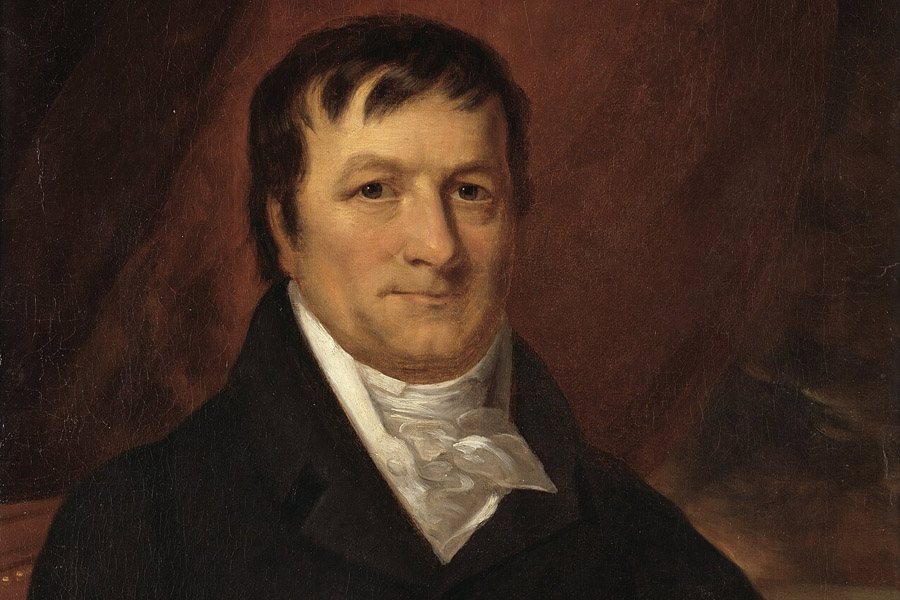
Who Johann Jacob Astor Was
Johann Jacob Astor, commonly known as John Jacob Astor, was more than a wealthy early American. I picture a keen, restless figure who crossed languages, boundaries, and industries with the instinct of someone who could hear modern capitalism turning. Born in Walldorf in Heidelberg on July 17, 1763, he was far from the New York streets that would make him rich.
He was the son of Johann Jacob Astor, born 1724, and Maria Magdalena vom Berg, born 1730. His father was a Walldorf butcher, and the family lived on commerce, survival, and practical labor. Mother died in 1764 while he was a newborn. He was the youngest of four sons, following George, Henry, and Melchior.
That family structure matters. Astor did not emerge from a vacuum. He came from a household where work was ordinary, mobility was possible, and kinship could serve as a ladder. In his case, family ties became stepping stones across Europe and then across the Atlantic.
Early Life and the Road to America
As a teenager, Astor left Germany and went to London in 1779. There he joined his brother George in the musical instrument trade. This move was more than a simple job change. It was the first sign of a pattern that would define his life: he moved toward opportunity with unusual speed.
Later 18th-century London was a gateway city full with commerce and ambition. Johann Jacob Astor became John Jacob Astor in that atmosphere. Name change represented more than language. Reinvention was symbolized. He was adapting to larger markets and worlds.
After the American Revolution, he sailed to America in 1783 or 1784. He first went to Baltimore, then New York. While the new republic was turbulent, Astor must have seen it as open water to a skillful navigator. Instead of doubt, he saw room.
How He Built His Fortune
I think Astor’s rise is easiest to understand if I break it into three major phases: music, fur, and real estate.
The musical instrument business initially occupied him. He soon switched to the fur trade, which made him rich. In the late 1780s, he started a New York fur products store. A wise and timely move. Fur demand was high, trade routes were increasing, and the nascent US was commercially flexible.
Astor was an expert commerce networker. He established ties throughout the Great Lakes, British North America, the West, and the Pacific. After founding the American Fur Company, he dominated the trade. Beaver pelts were more than animal items then. They traveled across wilderness and ports like soft brown cash.
He entered Chinese-related trade, especially opium. That period of his career shows the hard realities of global commerce. Astor was more than a merchant selling products. He participated in a system that linked wealth to immoral commerce.
His fur business declined around 1830 as markets and trend altered. Again, his timing shines. He abandoned a dying empire. Instead, he focused on Manhattan real estate. This choice may have been his best. New York land was the Astor fortune’s granite basis. Fur made him rich. Real estate sustained the family dynasty.
When he died in New York City on March 29, 1848, his estate was estimated at $20 million to $30 million. In his own era, that sum was staggering. He was widely regarded as the first multi millionaire in the United States.
His Marriage and Household
In 1785, Astor married Sarah Cox Todd. Her role in a great man’s story was not ornamental. She reportedly oversaw business concerns while he was in New York. I value that information because it shows the home as a collaboration, not just a couple.
Sarah Cox Todd was born in 1762 and died in 1832. Their marriage lasted decades and spanned the years in which Astor’s fortune took shape. In many family dynasties, one person becomes famous while another quietly keeps the machinery running. Sarah appears to have been that kind of force.
Together they had eight children, though not all survived into adulthood. Their family included joy, grief, continuity, and loss, like so many families of the 18th and 19th centuries.
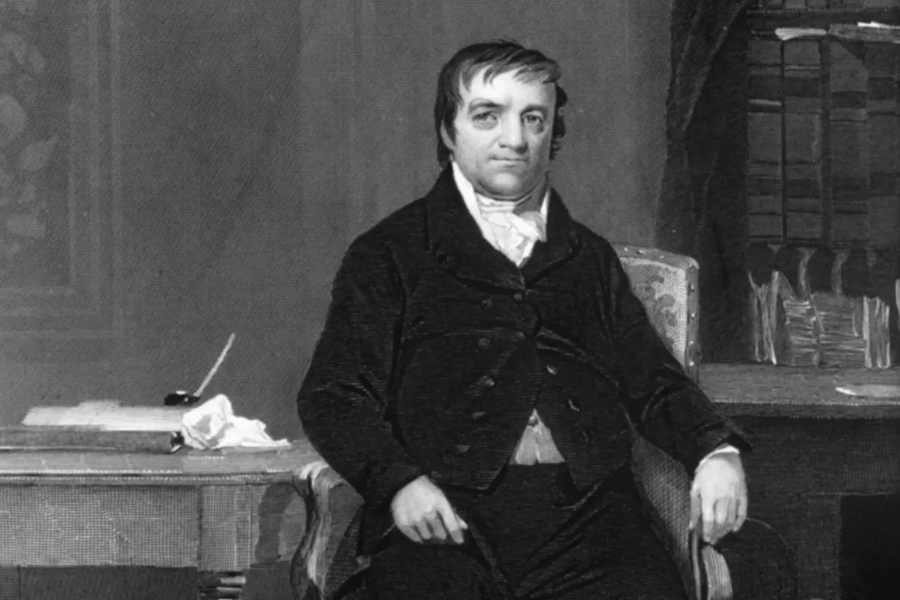
The Immediate Family Members
To understand Johann Jacob Astor properly, I need to separate his immediate family from the later generations who carried the Astor name into Gilded Age legend.
Here is a clear view of his closest family:
| Family Member | Relationship | Notes |
|---|---|---|
| Johann Jacob Astor (1724 to 1816) | Father | Butcher in Walldorf |
| Maria Magdalena vom Berg (1730 to 1764) | Mother | Died when Astor was very young |
| George Astor | Brother | Older brother, connected to the London trade |
| Henry Astor | Brother | Older brother |
| Melchior Astor | Brother | Older brother |
| Sarah Cox Todd (1762 to 1832) | Wife | Married Astor in 1785, helped manage affairs |
| Magdalena Astor | Daughter | One of their children |
| Sarah Todd Astor | Daughter | Stillborn |
| John Jacob Astor Jr. | Son | Immediate child, not the later famous descendants |
| William Backhouse Astor Sr. | Son | Key heir to the family line |
| Dorothea Astor | Daughter | Immediate child |
| Henry Astor II | Son | Died as a child |
| Eliza Astor | Daughter | Immediate child |
| Unnamed son | Son | Died shortly after birth |
This table helps clear up a common confusion. Names such as John Jacob Astor III, William Backhouse Astor Jr., and John Jacob Astor IV belong to later generations. They were descendants, not the direct children of Johann Jacob Astor himself.
The Astor Family Line and Later Generations
The Astor name did not end with the founder. It multiplied, adapted, and entered American high society with almost theatrical force. If Johann Jacob Astor built the furnace, later Astors forged the glittering metal of family prestige from it.
Among his children, William Backhouse Astor Sr. became especially important to the continuation of the family’s wealth and status. Through him and other descendants, the Astor family became one of the most powerful dynasties in New York and the United States.
This is why many subsequent Astors are recognized separately. From the trunk Astor planted, John Jacob Astor III, William Backhouse Astor Jr., and John Jacob Astor IV are branches of the family tree. Their fame can make people forget the founder’s smaller, more personal home, which was plagued by high child mortality.
Public Life and Social Role
Astor was more than a businessman. His civic and ethnic community involvement was also notable. He was New York’s German Society’s president from 1837 to 1841. That job implies that he maintained his German roots despite adapting to American economic life.
He intrigues me with his dual identity. Immigrant, insider, outsider, empire builder. He came from outside yet helped build the nation’s economy. He was one of those people who seemed to be both ancient and fresh.
Philanthropy and Legacy
Astor’s name survives not only because he made money, but because some of that money was directed into public memory. He left a bequest of $400,000 for the Astor Library, a major cultural gift that later became part of the New York Public Library. He also provided funds for his German hometown.
That act matters because it shows another side of wealth in the 19th century. Money could build private palaces, but it could also shape public institutions. In Astor’s case, his legacy moved from pelts and property into books, learning, and civic space.
His name also lives on geographically. Astoria, Astor Place, and other place names carry it forward. These are not just labels on maps. They are footprints pressed into the landscape by one man’s fortune and ambition.
Why His Family Story Still Matters
Johann Jacob Astor’s life encapsulates American characteristics including immigration, reinvention, trade, family strategy, and inherited riches. He went from German village butcher’s son to US wealthiest guy. That arc is legend-like but based on dates, names, marriages, businesses, and property.
That arc is enriched by his family. His parents started him. His brothers were members of his early commerce network. His wife, Sarah Cox Todd, supported the family and company. His offspring connected one fortune creator to a lasting dynasty.
Without the family members, Astor becomes a statue. With them, he becomes human.
FAQ
What was Johann Jacob Astor’s original name?
His birth name was Johann Jacob Astor. After moving into the English speaking world, he became widely known as John Jacob Astor.
When and where was Johann Jacob Astor born?
He was born on July 17, 1763, in Walldorf near Heidelberg, in what is now Germany.
Who were Johann Jacob Astor’s parents?
His father was Johann Jacob Astor, born in 1724, and his mother was Maria Magdalena vom Berg, born in 1730.
Did Johann Jacob Astor have siblings?
Yes. He was the youngest of four sons. His older brothers were George, Henry, and Melchior.
Who was Johann Jacob Astor’s wife?
He married Sarah Cox Todd in 1785. She also helped manage business and household affairs.
How many children did Johann Jacob Astor have?
He and Sarah Cox Todd had eight children in total, though several died in infancy or childhood.
Which of his children mattered most for the later Astor dynasty?
William Backhouse Astor Sr. became especially important because he carried forward the family wealth and helped anchor later generations of the Astor dynasty.
Was John Jacob Astor IV his son?
No. John Jacob Astor IV belonged to a later generation. He was a descendant, not an immediate child of Johann Jacob Astor.
How did Johann Jacob Astor become wealthy?
He built wealth through the musical instrument trade, the fur trade, commerce with China, and especially New York real estate.
How rich was he when he died?
At his death in 1848, his estate was estimated at about $20 million to $30 million, making him one of the richest Americans of his time.
What is Johann Jacob Astor’s lasting legacy?
His legacy includes the Astor family dynasty, major New York real estate holdings, the Astor Library, and a lasting place in the story of American wealth and immigration.