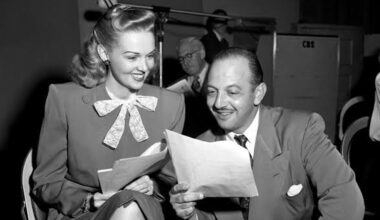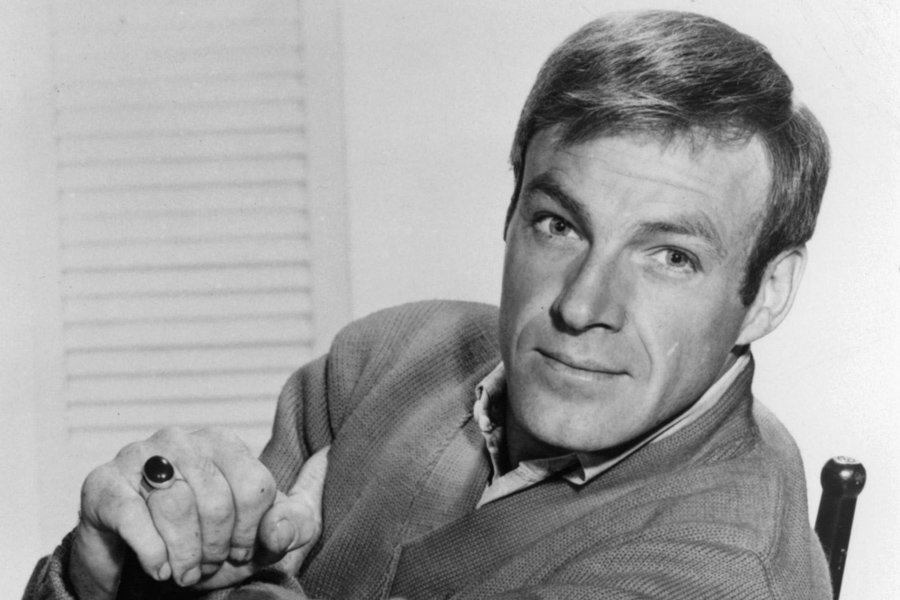
Who Don Franks Was
I regard Don Franks as a performer who never stayed in one box. Donald Harvey Francks, born February 28, 1932, in Burnaby, British Columbia, is better known as Don Francks. He was adopted shortly after birth, raised in modest Vancouver conditions, and self-built. His mother worked at a music store and his father was an electrician, which seemed fitting for his existence.
He quit high school at 15. I know something about him just from that. No gates or immaculate corridors lined his path. It involved work, improvisation, hustling, and nerve. He apparently did radio impressions as a toddler, hinting at his numerous voices. Before becoming an actor, singer, jazz musician, and voice performer, he was a young person building something from nothing.
That self-made quality stayed with him. It gave his career a rough-grained energy, like a blues note held just long enough to sting.
Early Life and a Career Built by Instinct
Don Franks’ unscripted approach to entertaining is most appealing. He appeared on Canadian television, mostly CBC, in the 1950s. These early years defined his range. He took on several roles. He learned to switch formats, audiences, and tones.
He appeared on TV and in variety shows by 1954 and 1955. His latter 1950s roles were Burns Chuckwagon from the Stampede Corral, Riding High, R.C.M.P., and The Fast Ones. His portrayal as Constable Bill Mitchell in R.C.M.P. boosted his profile. He soon entered U.S. television and became one of the few Canadian entertainers who could transcend borders without losing his identity.
He had the kind of career that looked less like a ladder and more like a river. It bent. It widened. It picked up new currents.
Film, Television, and Voice Work
Don Franks was fluid in television, cinema, Broadway, radio, and animation. That important since many performers have one image. He constructed several. One audience saw him as a theatrical actor. Jazz singer, for another. Another animated series voice.
In the 1960s, his television career expanded into American shows such as Mission: Impossible, The Man from U.N.C.L.E., The Wild Wild West, and Mannix. These appearances showed that he could fit into fast-paced commercial television while still retaining a distinct screen presence.
Broadway and film provided depth. His roles in Kelly and Finian’s Rainbow with Fred Astaire and Petula Clark made him famous between 1965 and 1968. That stretch showed he could handle musicals and large-scale projects, not simply episodic TV.
Many fans knew him as Walter in La Femme Nikita from 1997 until 2001. Walter, an innovator, conscience, and shadowy genius, was notable. It fit Don Franks wonderfully. He made quirkiness and genius feel comfortable. He was no gadget dispenser. He portrayed a guy with secrets, wounds, and humor.
He opened more doors with his speech. His cartoon roles include Inspector Gadget, Star Wars: Droids, Ewoks, Police Academy, Swamp Thing, and X-Men. His voice acting, however unnoticeable, enriched his legacy. Children, science fiction lovers, and animation audiences may not have recognized him, but he was in their minds.
A Musician as Much as an Actor
I do not think Don Franks can be understood fully if he is described only as an actor. Music was not a side road in his life. It was one of the central roads.
A jazz vocalist and instrumentalist, he played trombone, percussion, and flute. He performed in respectable jazz clubs and was known as a serious musician, not a celebrity who sang. That distinction counts. Practice, stage experience, and artistic devotion formed his musical individuality.
He also recorded and released music, including the 2014 album 21st Century Francks. Even late in life, he was still making work. That says a great deal about his temperament. He was not living on old applause. He was still creating.
There is something fitting in the nickname Iron Buffalo. It suggests force, endurance, and a kind of weathered dignity. In music especially, that nickname feels earned.
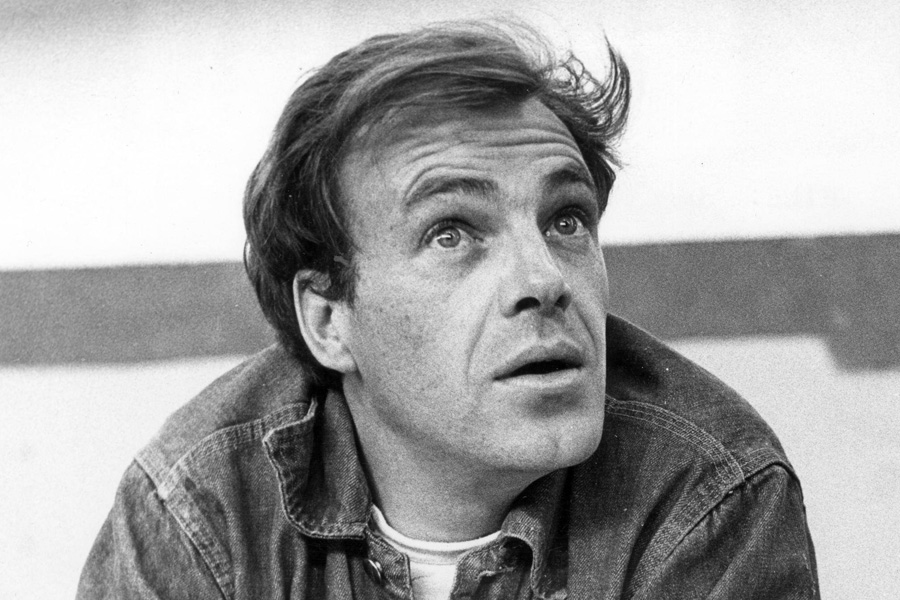
Family Background and Personal Life
Don Franks’ personal life involves distinct facts and silent gaps in his family history. His adoptive parents’ details are few in public archives, but the general outline is constant. He was adopted soon after birth and raised working-class. That start formed his independence and certainly boosted his self-invention.
He married twice. His first marriage was to Nancy Sue Johnson in 1962. That marriage ended in divorce in 1967. Public family listings identify two children from that union: Trane Francks and Tyler Francks.
He married Lili Clark (after Lili Francks and Lili Red Eagle) on May 4, 1968. Her marriage lasted till his 2016 death. She was an actor. His second marriage was his main family partnership and produced the most famous children.
Public records say he had five children in total, though only four are consistently named in the material available: Trane, Tyler, Cree Summer, and Rainbow Sun Francks.
Nancy Sue Johnson and the First Family
I think Nancy Sue Johnson occupies an important place in the Don Franks story because she belongs to the years when his adult life was still taking shape. They married in 1962, at a time when his career was expanding across television and performance. Their marriage lasted 5 years, ending in 1967.
Trane and Tyler Francks are descendants of the union. Trane and Tyler are less public than other family members. Privacy contrasts with the family tale. Some branches of the family live in the spotlight, while others are in shadow.
That difference should not make them less important. It simply means their lives were not turned into public biographies in the same way.
Lili Francks, Also Known as Lili Clark and Lili Red Eagle
Lili Francks appears in the public record under several names, including Lili Clark and Lili Red Eagle. She married Don Franks on May 4, 1968, and remained his spouse for nearly 48 years, until his death on April 3, 2016.
She matters more than time in his life. She is the focus of the family, which eventually had two famous offspring. As an actress, she indicates a creative relationship, not just domestic. Performance-based households typically speak art. Their house may have included music, roles, rehearsals, ideas, and tales every day.
Cree Summer: Daughter, Performer, and Public Heir
Cree Summer may be Don Franks’ most famous child. An actress and singer born in 1969, she developed a distinct public identity. Her father did not make her famous. Her career was built. Her relationship with him is a prominent family thread.
She grew up with him in Saskatchewan’s Red Pheasant Cree Nation, according to her bio. This adds context to family history. It suggests life beyond studios and metropolitan apartments. It implies cultural exchange and a childhood influenced by art and community.
When people mention Don Franks today, they often do so through Cree Summer as much as through his own screen credits. That is one measure of legacy. A creative life continues to echo through another voice.
Rainbow Sun Francks: Son and Screen Presence
Rainbow Sun Francks, born in 1979, is another well-known child of Don Franks and Lili. He became an actor and producer, carrying the family name into a later generation of screen work.
His public career continues the family tradition of performance as heritage, not imitation. Artists’ kids struggle in shadow. Here, the shadow resembles a canopy. It shelters and covers. Rainbow Sun Francks established his unique style within a creative tradition.
His very name is hard to forget, and it suits a family with such a vivid public profile.
Trane Francks and Tyler Francks
Trane Francks and Tyler Francks are publicly identified as children from Don Franks’ first marriage to Nancy Sue Johnson. Beyond that, reliable public detail is sparse. I think it is worth stating that clearly rather than filling the gaps with guesswork.
What can be said is simple: they belong to the documented family record, and they are part of the personal history behind the public performer. In many artistic families, some members become household names while others remain private. That seems to be the case here.
Key Dates at a Glance
| Year | Event |
|---|---|
| 1932 | Born on February 28 in Burnaby, British Columbia |
| 1947 | Left high school at about age 15 |
| 1954 to 1955 | Began television and variety career |
| 1957 to 1960 | Expanded through CBC and U.S. television work |
| 1962 | Married Nancy Sue Johnson |
| 1967 | Divorced Nancy Sue Johnson |
| 1968 | Married Lili Clark on May 4 |
| 1969 | Daughter Cree Summer was born |
| 1979 | Son Rainbow Sun Francks was born |
| 1980 to 1981 | Received ACTRA honors for dramatic performance |
| 1997 to 2001 | Played Walter on La Femme Nikita |
| 2014 | Released 21st Century Francks |
| 2016 | Died on April 3 in Toronto, Ontario |
| 2018 | Toronto honored him with Don Francks Laneway |
Honors, Legacy, and Public Memory
Don Franks received notable acting recognition in 1980 and 1981 through ACTRA awards for best dramatic performance connected to Drying Up the Streets and The Phoenix Team. Those honors underline that he was not merely versatile. He was excellent.
His legacy endures. Don Francks Laneway in Toronto honors him by turning memory into geography. I like the image. Laneways aren’t pedestal monuments. A route, corridor, and lived-in city portion. That suits a man whose career took numerous artistic paths.
In Toronto, Ontario, he died of lung cancer at 84 on April 3, 2016. After his death, tribute performances, music festivals, fan communities, and his children’s professions spread his reputation. Some artists leave statues. Others leave currents. Franks left current.
FAQ
What was Don Franks’ real name?
Don Franks appeared publicly as Don Francks. His full birth name was Donald Harvey Francks.
When and where was Don Franks born?
He was born on February 28, 1932, in Burnaby, British Columbia.
Was Don Franks adopted?
Yes. Public biographical accounts state that he was adopted shortly after birth.
What was Don Franks best known for?
He was known for a wide-ranging career in acting, music, and voice performance. Many television viewers especially remember him as Walter on La Femme Nikita.
Was Don Franks also a musician?
Yes. He was a jazz vocalist and instrumentalist, and music was a major part of his career, not a secondary pastime.
Who was Don Franks’ first wife?
His first wife was Nancy Sue Johnson. They married in 1962 and divorced in 1967.
Who was Don Franks’ second wife?
His second wife was Lili Clark, later widely known as Lili Francks and also identified as Lili Red Eagle. They married on May 4, 1968.
Who were Don Franks’ children?
Publicly named children include Trane Francks, Tyler Francks, Cree Summer, and Rainbow Sun Francks. Public records also state that he had five children in total.
Is Cree Summer Don Franks’ daughter?
Yes. Cree Summer is publicly identified as his daughter and is one of the best-known members of the family.
Is Rainbow Sun Francks Don Franks’ son?
Yes. Rainbow Sun Francks is publicly identified as his son.
When did Don Franks die?
He died on April 3, 2016, in Toronto, Ontario, at age 84.
How is Don Franks remembered today?
He is remembered through his film and television work, his jazz career, his voice performances, his family legacy, and the Toronto laneway named in his honor.